How to Address Broken Branches on ʻUlu Trees
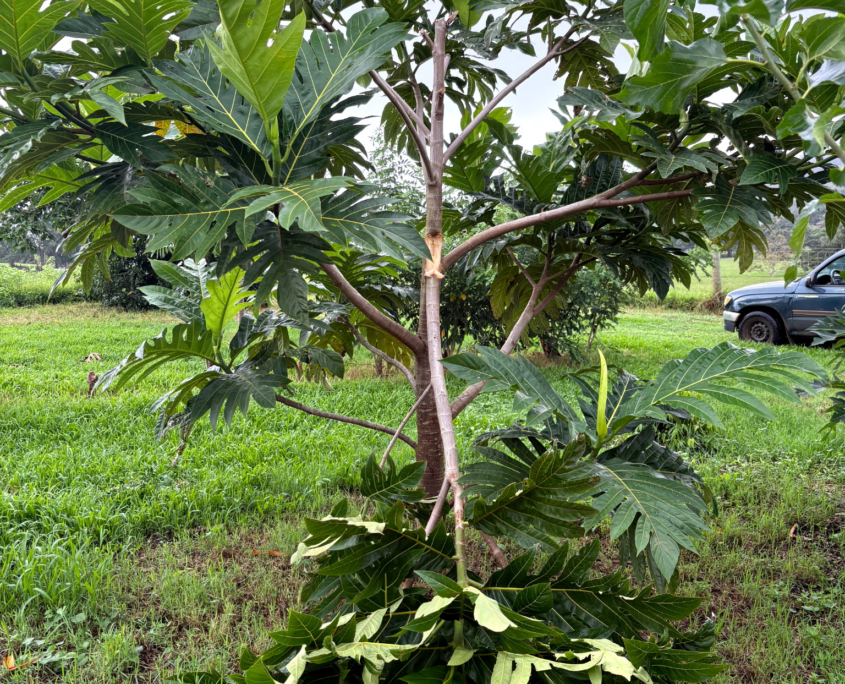
Whether caused by a hurricane or tropical storm, heavy fruit load, or a random occurrence – Broken Branches are an issue all agroforestry practitioners and orchardists will experience at some point. ʻUlu trees are very resilient and adapted to healing over broken branches, but sometimes extra care is needed to ensure long-term tree health and productivity. Below is a simple guide to help address unexpected wounds on your trees.
1. Assess the Damage First
- Clean snap with no tearing of the bark collar:
— Trim it cleanly and treat the wound if necessary. - Splintered or a Hanging Limb:
— cut it back to a strong branch union or the branch collar at the trunk - Main limb torn off at the trunk:
— Quick action should be taken to remove the branch and clean the exposed area (Whole ʻulu trees rarely need to be fully removed)
2. When to Remove vs. Treat
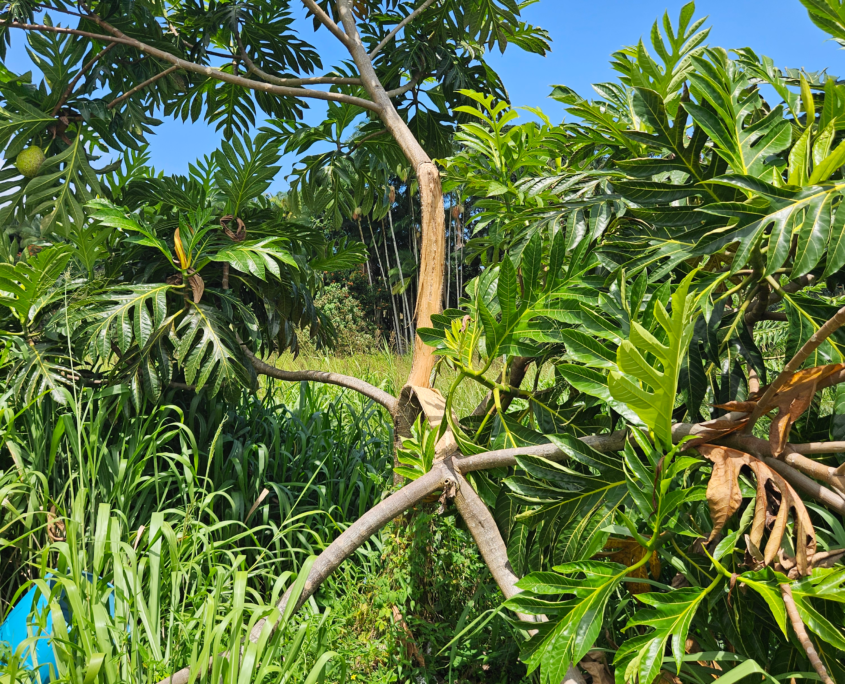
- Minor branch (< 2” diameter): Prune & Clean appropriately. Success is likely.
- Major limb break: Clean cut & dress wound. Monitor closely.
- If rot sets in and sudden wilting occurs — the tree itself may be at risk and it should be considered for heavy pruning or complete removal.
- Whole trunk split or major structural damage:
- Consult an arborist for large tree removals.
- Some breadfruit trees can survive with cabling or bracing, but a deep trunk wound is serious, and long-term productivity is likely compromised.
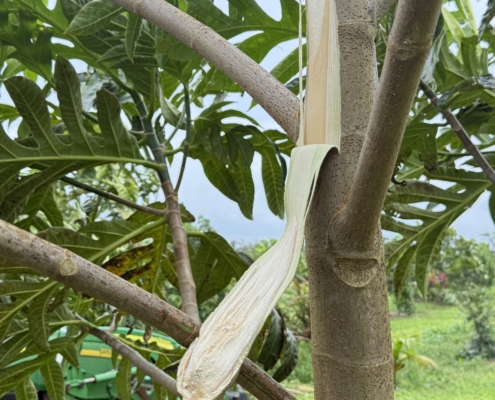
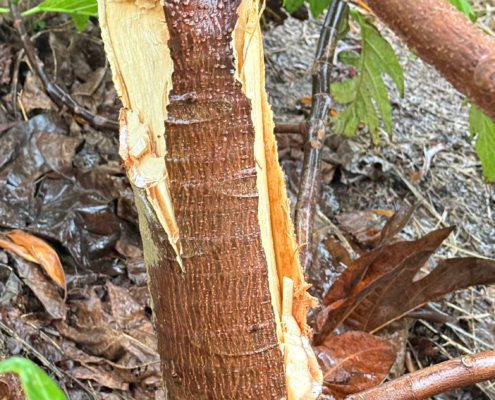
3. Pruning the Broken Branch
*Make sure to use proper safety gear or consult an arborist when working high in the trees*
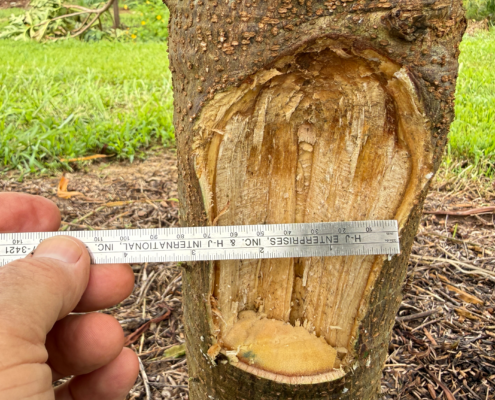
- Cut cleanly – Use a sharp pruning saw or loppers. Never leave a jagged stub (Fungi love rough wounds which have more surface area)
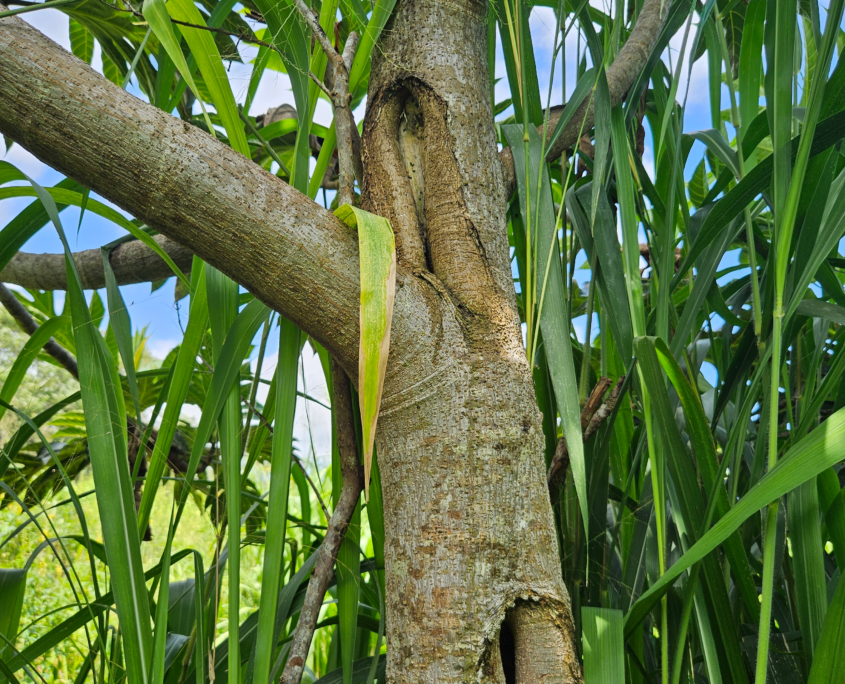
- Cut just above the collar (the swollen ring where the branch meets the trunk or a larger limb), not flush with the trunk. Donʻt leave a long stub more than two inches.
- Remove torn bark – If bark is peeled or frayed around the break, smooth the edges with a clean knife so the wound can callus over cleanly and continued bark peeling is not a risk.
- Disinfect your tools – Wipe blades with 70% isopropyl alcohol or Clorox between cuts in order to prevent introduction of pathogens.
- Timing – Prune as soon as you notice the break. Avoid pruning during heavy rain or when the tree is wet which can spread pathogenic microbes into fresh wounds.
4. Natural Wound Treatments & Rot Prevention
- Generally, all it takes is 1 – 2 days of the exposed wood to dry and the tree will be able to start sealing itself off from pathogens in a process known as Compartmentalization (or CODIT). This is when trees “wall off” wounds rather than truly “heal” them. Caution should be used with sealers as it can inhibit a tree’s natural ability to callus and heal wounds. We are often better off promoting a tree’s natural ability to heal itself (which ʻulu is well adapted to), rather than applying something that will interfere with this in the long-term. Breadfruit in Hawaiʻi is most vulnerable to Phytophthora (fruit rot/root rot), but other diseases are also known to affect ʻulu, such as: Fusarium spp., Phellinus noxius (brown stem rot), Rhizoctonia solani, and Pythium sp. A clean, dry, and sometimes treated wound, are what can help prevent these infections. Below are some effective protection methods to consider:# 1 Priority – Keep the wound dry!
- If rain is expected or a wet wound is unavoidable where your tree is located, consider the methods below…
Support the Tree’s own healing process:
- Olena (Turmeric), Aloe Vera, Bee Propolis, and other easily accessible anti-fungal remedies should be considered first. Wipe on a thin layer to promote wound healing.
- A multi-surface disinfectant – 1:10 vinegar-to-water spray can lower the pH on nearby bark, making conditions less hospitable for fungal spores.
Bordeaux Mixture
- A copper-and-lime mix (Bordeaux) is widely recommended for high-risk wounds on tropical fruit trees.
- Paint it directly onto the cut surface immediately after pruning.
- Do not use straight copper hydroxide which can be damaging to the tree’s cambium layer.
Sulfur Dust, Paste, or Spray
- Sulfur-based fungicides are organic-approved and effective against a broad range of pathogenic fungi
- Dust the cut surface or mix with water into a paste and brush on.
- KNF Practitioners can use homemade liquid Sulphur to wipe or spray on wounds for the same anti-fungal effect
Last Resort: Grafting Mastic & Tree Wound Sealer (Physical Barrier)
- Sealing the wound with grafting mastic or pruning seal may be the best option for drastic high-risk wounds
- May inhibit the natural healing ability or even trap in moisture in the long-term
- Some brands include natural antifungal ingredients
5. Aftercare for the Tree
- ʻUlu trees will often have a stress response after major wounds that cause new vegetative growth. We can support this growth by supplying what they need to remain healthy and not over-stressed.
- Fertilize: Apply a balanced organic fertilizer (e.g. 6-6-5 or similar) after pruning to support regrowth. If the tree is fruiting or flowering, consider something with Calcium and Potassium.
- Mulch: Spread chopped prunings or fresh mulch around the drip line (not touching the trunk) to retain moisture and feed soil microbes.
- Water: Keep soil moisture consistent — a water-stressed tree is far more susceptible to pest and disease.
- Monitor: Check the wound weekly for the first month. If you see black ooze, a mold of sorts, sunken bark, or white fungal growth, clean the wound and apply a treatment.