Mature vs. Full-size Immature ʻUlu
ʻUlu fruit can appear full-size and ready for harvest before the starches have fully developed, leading to inferior quality fruit for most culinary applications. These “Full-size Immature” or “Green” fruit are currently accepted from co-op members under the Grade C specification – please review the Harvesting Guidelines for details.
Discerning between mature vs. full-size immature fruit can be tricky, and we are committed to providing farmers with ongoing education and technical support to successfully meet co-op quality standards and maximize harvest volumes & revenues.
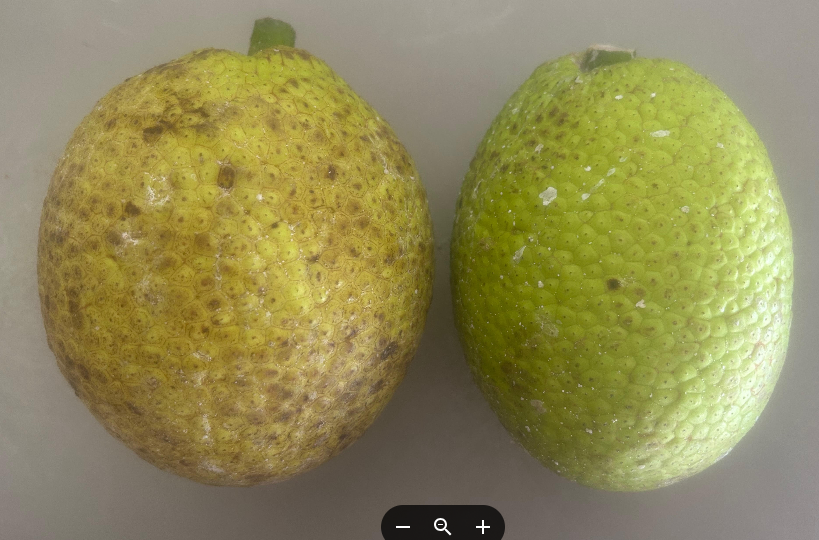
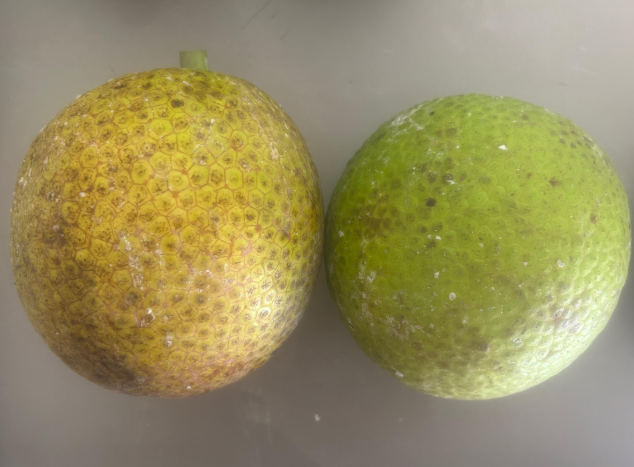
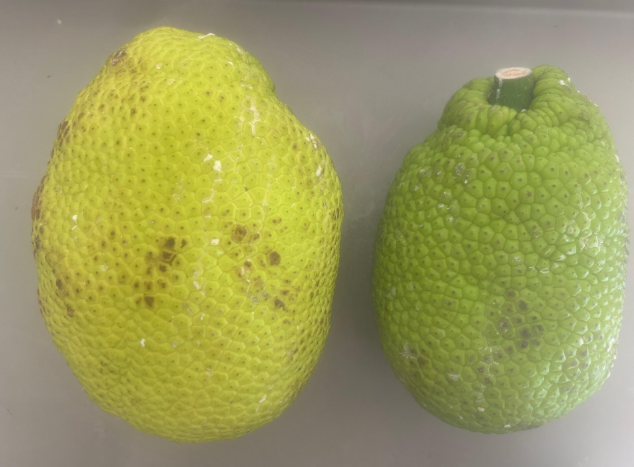
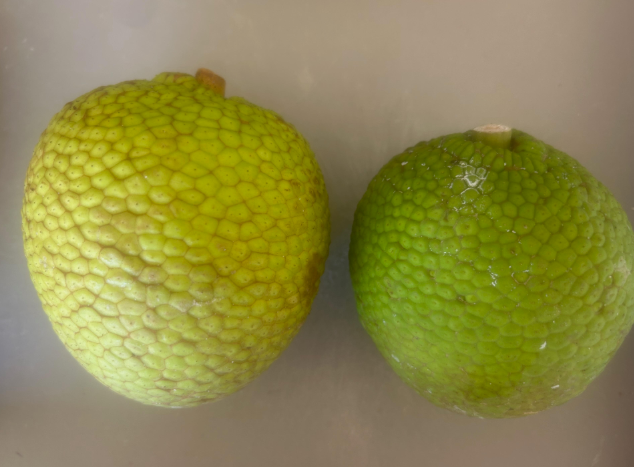
Breadfruit maturity indicators can be different for each variety. Below are some photos showing Mature fruit on the Left and Full-size Immature fruit on the Right, for the following varieties (from left to right): Maoli, Otea, Lipet, Puou
While full-size immature fruit is perfectly edible and may be acceptable for other uses, it does not meet co-op quality standards for steamed and frozen product due to its relatively rubbery texture, greenish hue, and stronger “grassy” smell and taste; here are some photos from our processing operation showing full-size immature fruit cut open.
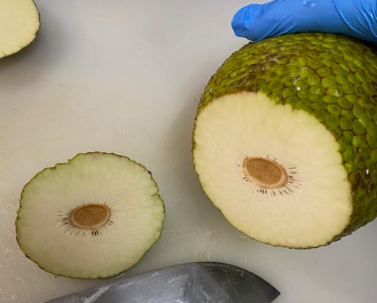
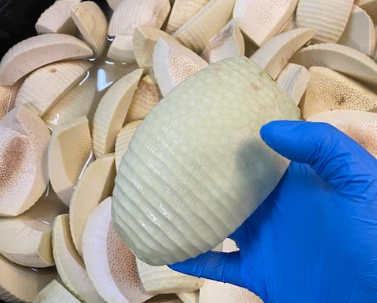
Tips for discerning mature vs. full-size immature in the field include:
- Intersegment color, which should change from green to yellow or brown when the fruit is mature (see photo below)
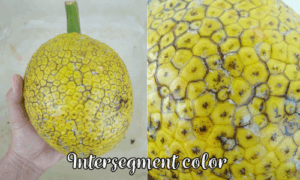
- Refer to this guide from UH for more information on how to use this indicator. Each variety has its maturity index. Watch our harvesting and variety identification videos to learn more, and contact us to determine the variety you have if you’re unsure.
- The percentage of green on the fruit, with <50% green indicating appropriate maturity in the ma’afala variety fruit.
- You can download the “Canopeo” app to your phone to measure the percentage of green on your fruit. *Photos of the fruit need to be cropped so that only the fruit is in the frame (no background) and then uploaded to the app.
- You can download the “Canopeo” app to your phone to measure the percentage of green on your fruit. *Photos of the fruit need to be cropped so that only the fruit is in the frame (no background) and then uploaded to the app.
- Don’t rely on size or latex drips as an indicator for maturity! Some immature fruit can get pretty large in size, while sap may drip onto immature fruit from branches or leaves above it, leading to a misjudged maturity.
- “Grassy” smell will indicate immature fruit when cut open.
- Look for a bright green ring just underneath the skin when fruit is cut open.
For more information on harvesting, please review our Harvesting Guidelines.or watch this Video on Harvesting ʻUlu. If you’re still in doubt, take a photo of your fruit in question and text it to our membership team for their feedback. 808-346-2762


