
How to Rear Nematodes
What are Nematodes
Nematodes are one of the most abundant and diverse soil organisms on the planet, and are being used as a successful biocontrol for a range of pests. When injected into infected trees, they have been found to kill Queensland Longhorn Beetle (an invasive beetle from Australia) larvae, providing a promising means of reducing QLB populations and protecting important agricultural and cultural trees.
Rearing Nematodes
Rearing (the process of raising or creating) these living organisms is in fact not as scary as it sounds! We were invited by Roxana Myers at the USDA labs in Hilo, Hawai’i to learn more about this process…
Line a petri dish with a piece of filter paper or a paper towel. Moisten the paper with distilled water containing your starter nematode culture. Place 10 to 20 healthy mealworms into the dish, pop the lid on, and store it in a dark drawer at room temperature for 2 to 3 days.
After a few days, check the larvae. If you are using Heterorhabditis, the infected mealworms will die and turn a distinct gummy, reddish-brown color due to the symbiotic bacteria the nematodes release. Crucial tip: If any larvae turn black or smell rotten, throw them away—they died from scavenger bacteria, not your biocontrol nematodes.
Once the larvae turn red, move them to a harvesting setup called a White Trap. Place a small petri dish lid upside down inside a slightly larger container. Lay a piece of damp filter paper over the small lid so the edges drape over the sides, and fill the outer container with a shallow layer of distilled water. Place the infected larvae on top of the draped paper.
In 10 to 14 days, the next generation of juvenile nematodes will have completely consumed the inside of the host. They will naturally crawl out of the carcass, slide down the damp paper, and swarm into the surrounding water. The water will take on a slightly milky, swirling appearance-those are your millions of new biocontrol agents!
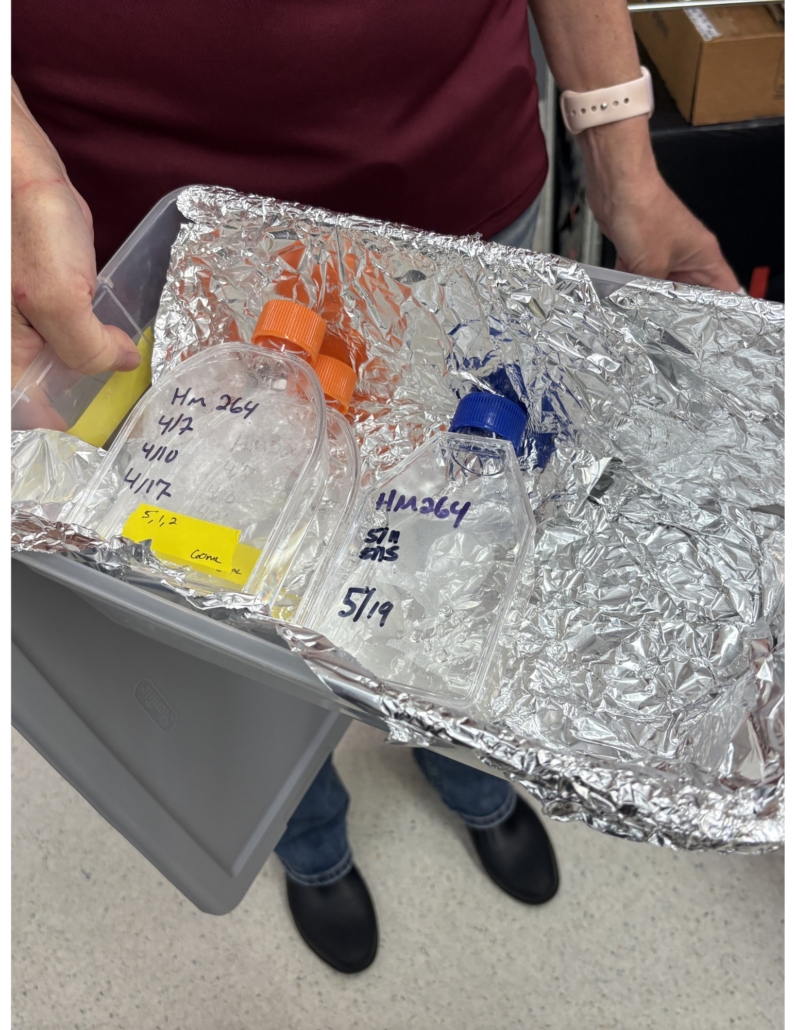
Here is an example of how the nematodes are stored. They have to be kept in a cool, dark enviornment. Wrapping foil around their container, and foil around whatever they’re being stored in, does the trick! No direct sunlight is recommened. For example, they should not be left in your car.
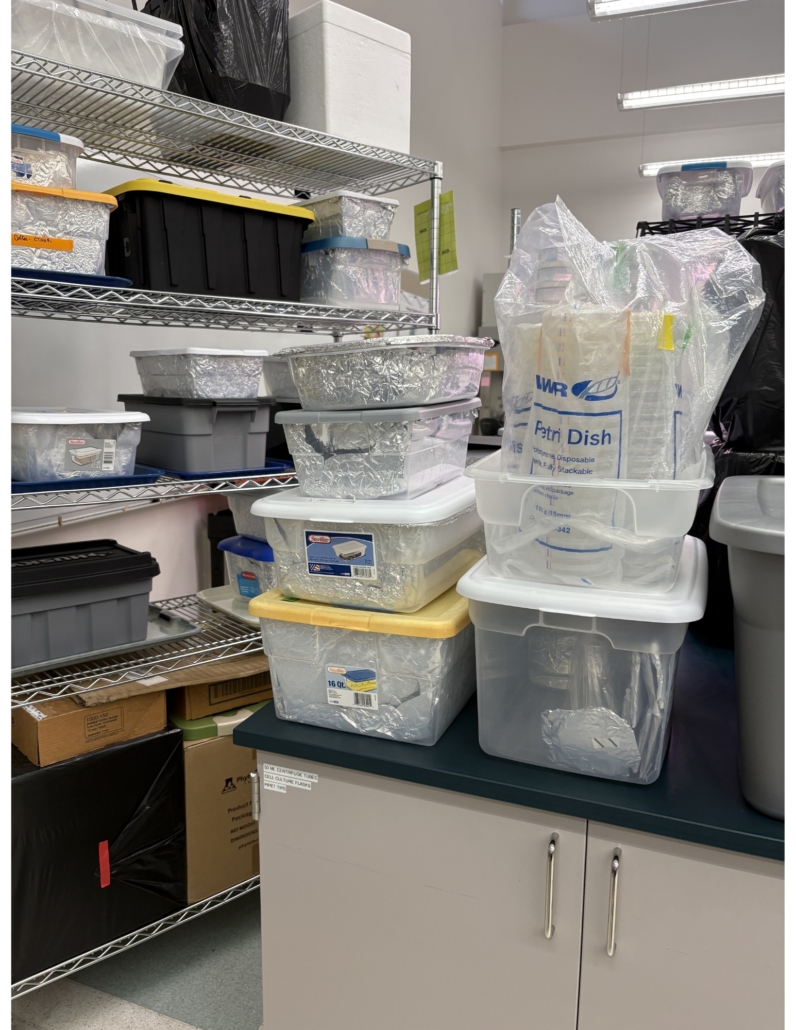
This is how the nematodes are stored; again everything has to be very dark. So, there is a lot of tin foil being utilized here.
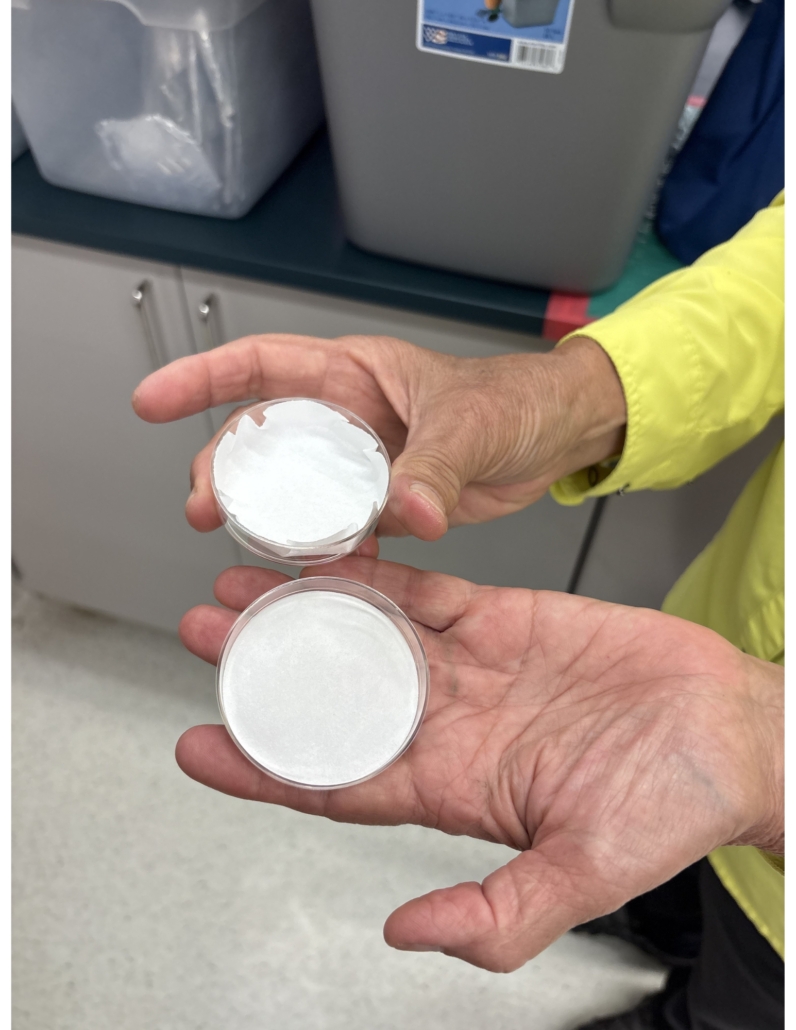
These are what the petri dishes look like that you will dampen with water and then dispense a few drops (about a quarter mL of) of existing nematodes onto. Make sure it is not too wet when you apply the nematode solution.
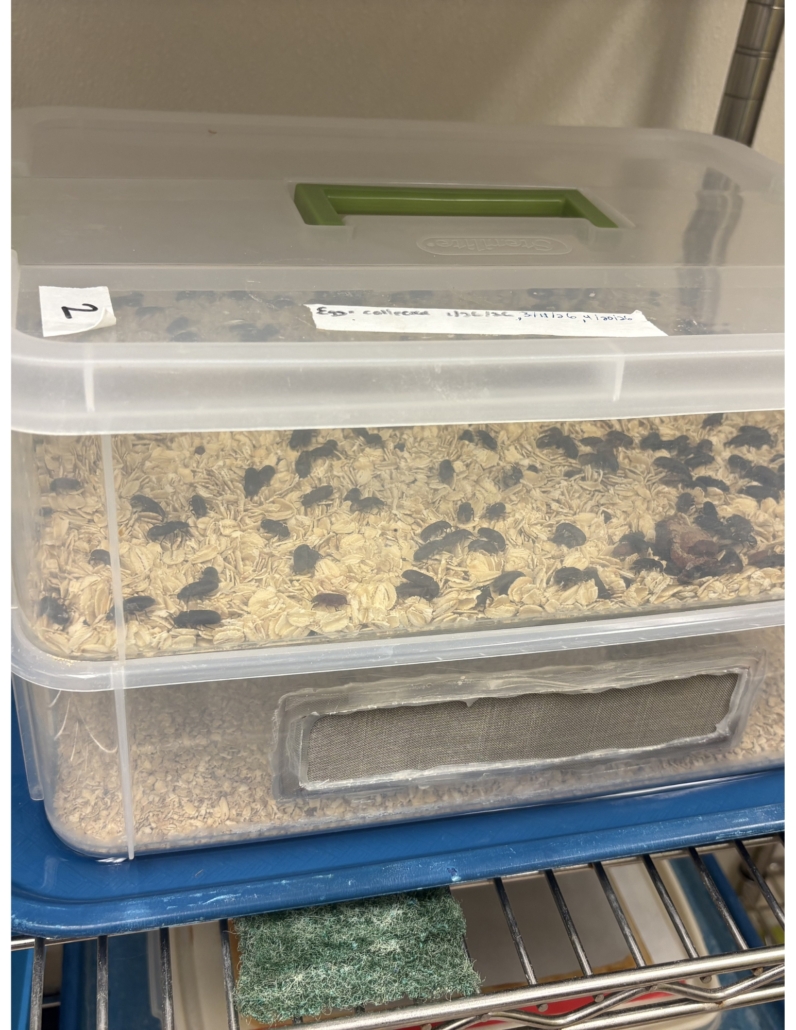
This is what goes into the prepped petri dishes: mealworms or any type of larvae! To keep your colony alive you can feed them mixtures of yeast, oatmeal, and powdered milk. Make sure that there are air holes so they can breathe.
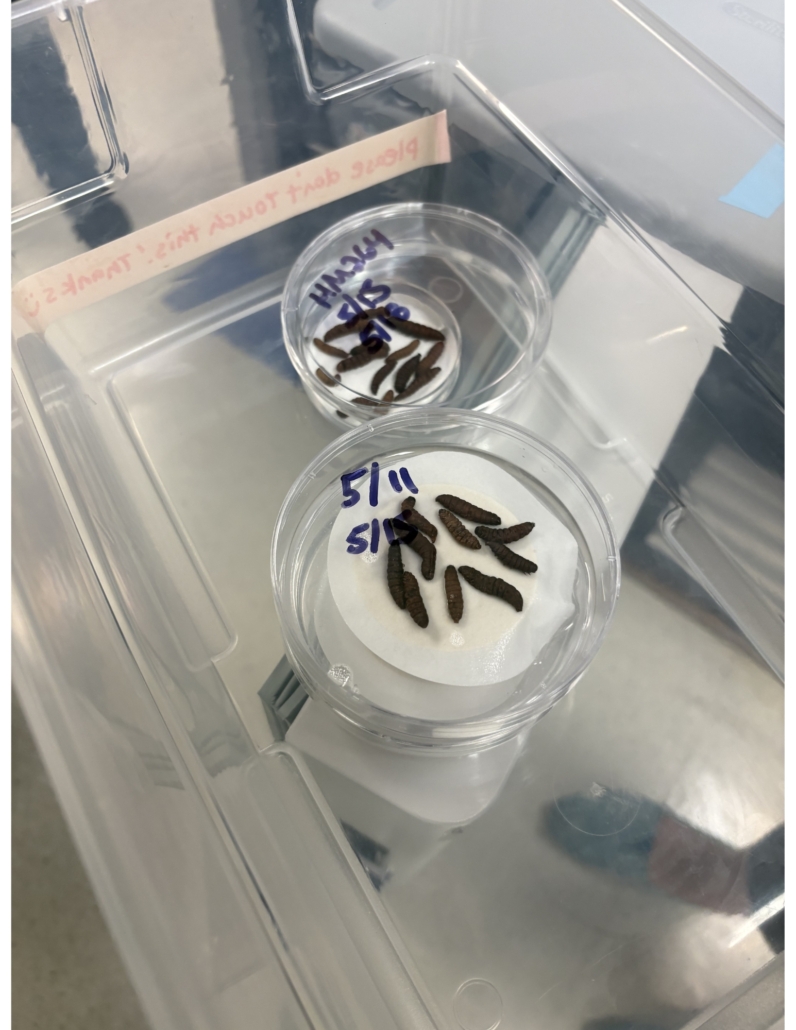
This is when you know that the nematodes are ready to be collected. The dead larvae (mealworms) will turn red, and you are ready to collect more nematodes that have left the larvae host and transcended into the surrounding water.
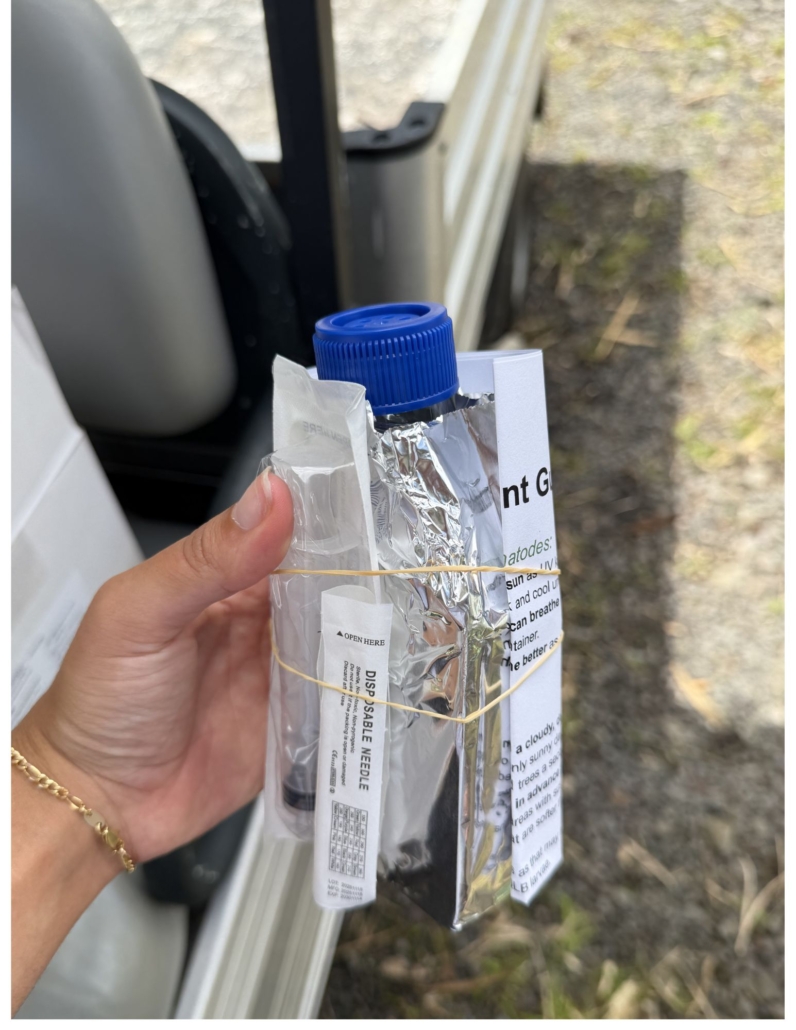
When you receive a nematode kit from BIISC you will get one container of nematodes, with a syringe for injection, and a needle for the syringe. Instructions for best use of the nematodes will also be provided.
Click on the link below to watch a video of the nematodes being injected into the petri dishes before the mealworm larvae is added!
For a step-by-step guide, please review this article from Michigan State University. This is a great resource for rearing your own nematodes!
Protect Your Trees: Get Your Free Nematode Kit
To begin this rearing process, or to utilize nematodes on your farm if you have an infected site from an invasive species, follow the steps below:
Take Action Now:
-
Get Treated: Email biisc@hawaii.edu to request your free nematode treatment kit. More information can also be found at https://www.biisc.org/.
-
Support Research: If you capture a beetle, please drop it off at the USDA-ARS PBARC research center (64 Nowelo St, Hilo).
-
Ask an Expert: For specific questions regarding the understanding of what type of pest you’re dealing with, contact Stacey Chun at dab.ppc@hawaii.gov or 808 – 974 – 4146


