About our Farmers
Starting in 2016 with only 9 farmers, HUC now has over 225 members in addition to processing centers across 4 counties in the state: Hawai‘i Island, Oʻahu, Maui and Kauaʻi. Our farmers represent a diverse sector of our agriculture industry and include backyard growers with a single family tree all the way up to farms with several hundred producing trees. Hawai‘i ‘Ulu Cooperative members are overwhelmingly small, family farmers and are generally representative of the Hawai‘i’s farming sector more broadly. A few differences between co-op farmers and the average Hawai‘i farmer include age – co-op farmers are significantly younger – and ethnicity – with 2-3 times as many Native Hawaiian farmers as the state average represented in the co-op.
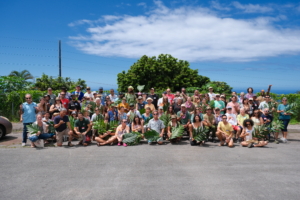
Demographic comparison of HUC farmer-members vs. Hawaiʻi principal farm operators
| USDA Census of Agriculture for Hawai’i (2022) | HUC Membership – 2022 Demographics | HUC Membership – 2026 Demographics | |
| Average Age | 60.7 years old ** | 45 years old | 54.3 |
| Gender | Men: 56.9%
Women: 43.1%* |
Men: 70%
Women: 30% |
Men: 68.4%
Women: 31.6% |
| Native Hawaiian/Pacific Islander | 8.4%* | 23% | 49% |
| Median Acreage | 150 acres* | 8 acres | 28.33 acres |
| # of Farms | 6,569*/11,833** | 111 | 214 |
| Total Acreage in Farms | 1,053,302* | 4,042 acres | 6,062 acres |
| Certified Organic | 2.2%* | 1% | 1% |
| With Hired Labor | 25.2%* | 9% | 9% |
| Beginning Farmers | 35.2%* | 40% | 69.8% |
Hear What Our Farmers Have to Say
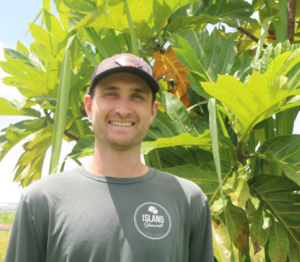
Island Harvest
Andrew Trump, of Island Harvest, says he has seen incredible growth over his years on the board of the ʻUlu Co-op, not just from his trees. With almost tenfold the number of members joined and hundreds of ʻulu trees planted, he hopes to contribute more to the co-op with their ʻulu production in the future. Unfortunately, feral pigs have posed a challenge to expanding Island Harvest’s ʻulu orchards.
Mahiʻai Made – Tom Menezes
Strong leadership within the co-op is also extremely important, Tom says, as many of the past co-ops he was a part of failed due to a lack of management.
He believes this is the right time for ʻulu, as it is coming back into the mainstream, and the Hawaiʻi food bill seeks to facilitate local, sustainable food production and consumption methods.
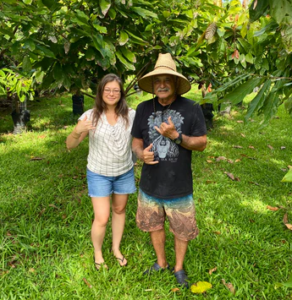
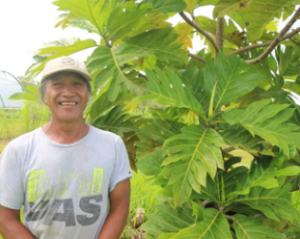
Stanley Eugenio
Stanley appreciates the support he has gotten within the ʻUlu cooperative. He loves how it has been led and sees how fair they are with each of their members, noting, “they really listen and take into account the needs of each person they are working with.” Stan helps several of our members on the East Side of Hawaiʻi Island and hand makes the best ʻulu pickers for our farmer-members!
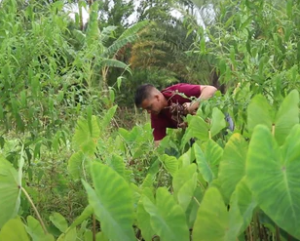
Ala Savio – Pilialoha Farms
“My experience is when we do things together we heal.” In both seeking help from and offering help to others and the ʻāina, Ala tends his relationships with people and plants as a continuous practice of healing. “I want help and I want to help, too. To me, being in community is helping each other.”
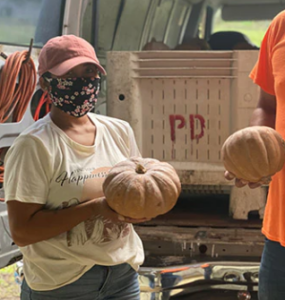
Aileen Lubong – Sweet Treats and Eats
Aileen says she and her family “decided to grow ʻulu and pumpkins to produce more sustainable food options for the community of Hawaiʻi” and she hopes that in the future we will see “more consumers of Hawaii utilizing these sustainable food as part of their daily meals,” ultimately “minimizing our dependency on imported foods.”
Kaivao Farm – Angela Fa’aanu
“The interest had always been there,” Angela said, referring to farming. “Living in Hawaiʻi is so different from the way we grew up. The capitalistic lifestyle is very different from a subsistence lifestyle. Today, we are highly dependent on stores for food. Most families in Tonga have a bush allotment where families grow food for subsistence. That is changing too though with increasing population and with the convenience of imported foods.”
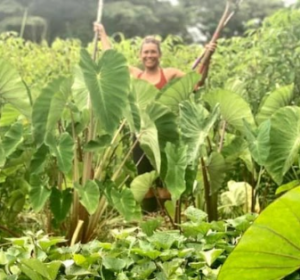
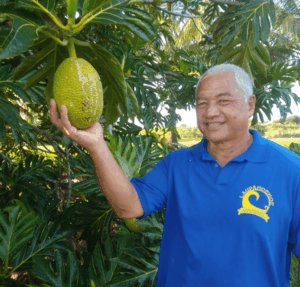
Wong Way Farms – Wally Wong
“We started farming to make use of our land and to grow things to eat,” Wally said. “I traveled around the island collecting different varieties of trees and plants. My favorite stop was the Amy Greenwell Ethnobotanical Botanical Garden. I am happy that my surplus breadfruit and taro is now being processed by the cooperative”


