Dropped Fruit? If, When & How to Use Aborted ʻUlu
ID’ing Dropped ʻUlu
When severe weather or other stressors cause ʻulu trees to drop fruit prematurely, it is helpful to understand which fruit is useable and what you can do with it. However, please remember that HUC cannot accept any aborted fruit.
Because ʻulu is a covered crop under the FDA Produce Safety Rule (21 CFR § 112.114), produce that grows off the ground and falls to the ground before harvest is classified as dropped produce and cannot be distributed or processed for consumption. Only fruit harvested directly from the tree can be accepted at drop-off sites.
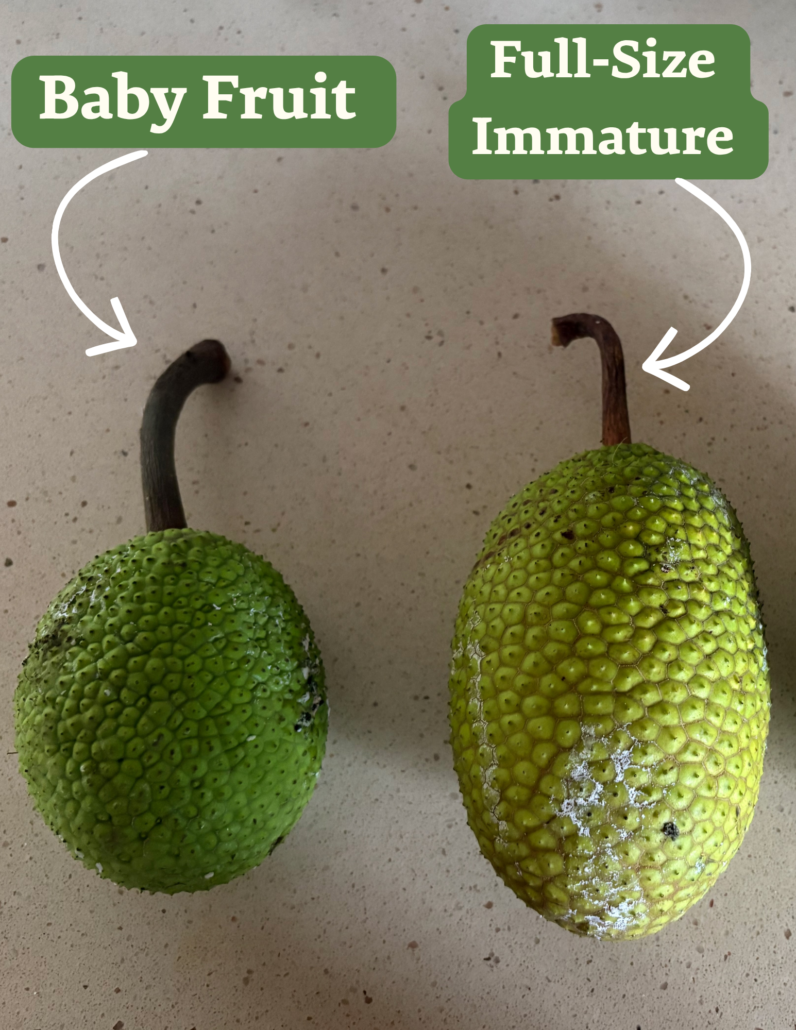
Aborted fruit usually falls into two maturity stage categories: Baby or Full-Sized Immature.
-
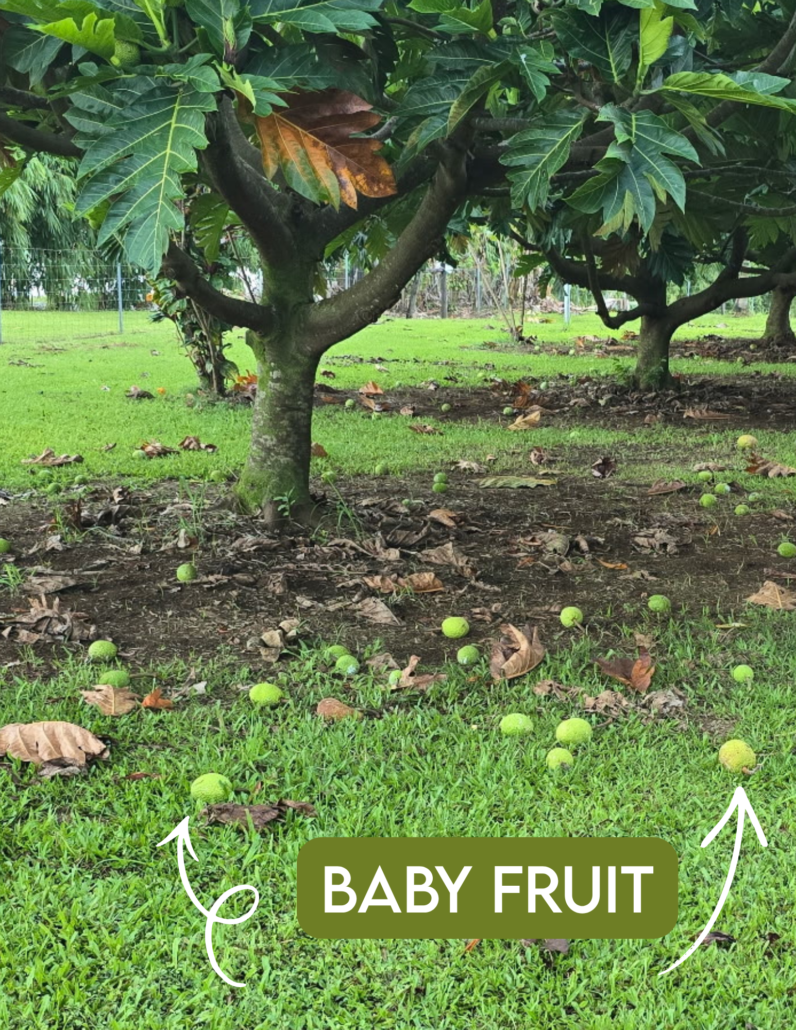
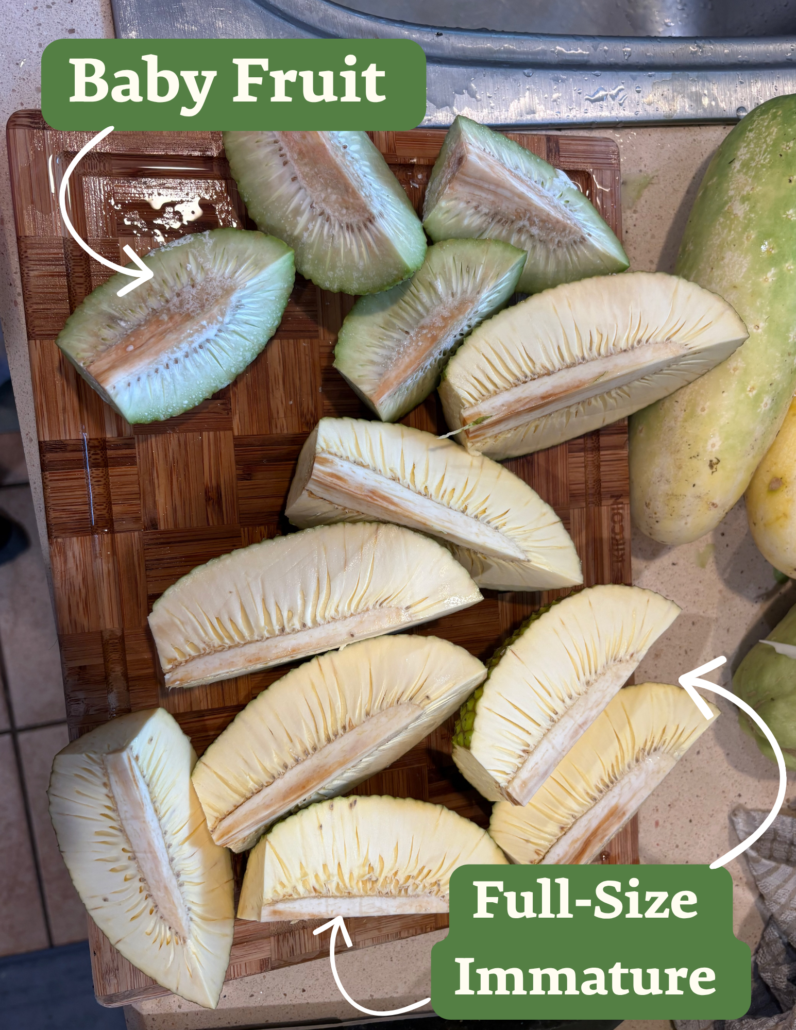
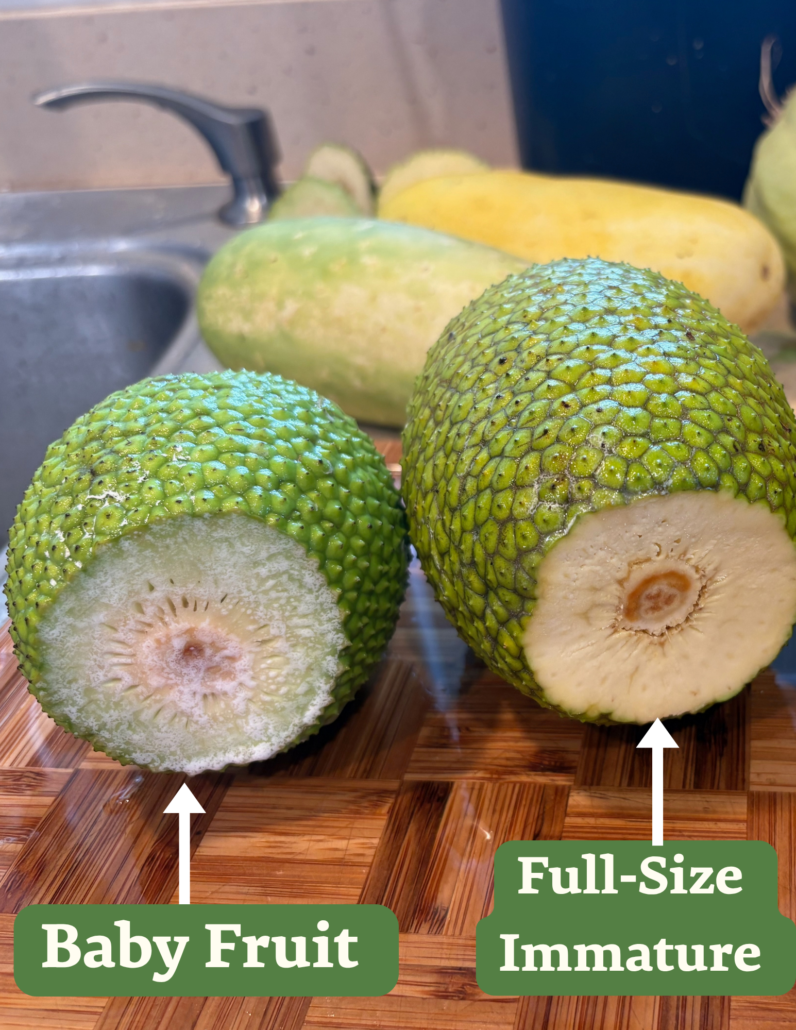
Baby Fruit: Small, baseball to softball size fruit that drop during early development, often due to natural tree thinning or sudden weather changes like droughts or increased rain. A few identifiable features include a bright inner green ring and they ooze lots of sticky white sap when sliced. It is better to use these fruits for pickled, marinaded, or boiled recipes. The taste has been compared to artichoke heart.
-
Full-Sized Immature Fruit: Fruit that has reached its full physical dimensions on the tree but fell before its starches fully matured into Grade A quality. This fruit has been compared to potato or vegetable.
In the Hawaiʻi ʻUlu Cooperative grading system, these full-sized immature fruit are classified as Grade C. To better identify your crop’s exact stage, please review our Mature vs. Full-size Immature ʻUlu page.
1. Sorting & Inspection: Is Your Dropped Fruit Safe to Eat?
- The Quick Inspection: Examine the skin for cracks, punctures or bruises from hitting rocks or branches when falling off the tree. Minor skin bruising is normal, but deep breaks in the outer skin allow dirt, insects, or bacteria to enter.
- Outer Appearance: Baby and full-size immature fruit skin generally remains bright green, and the outer individual segments have not yet flattened or smoothed out.
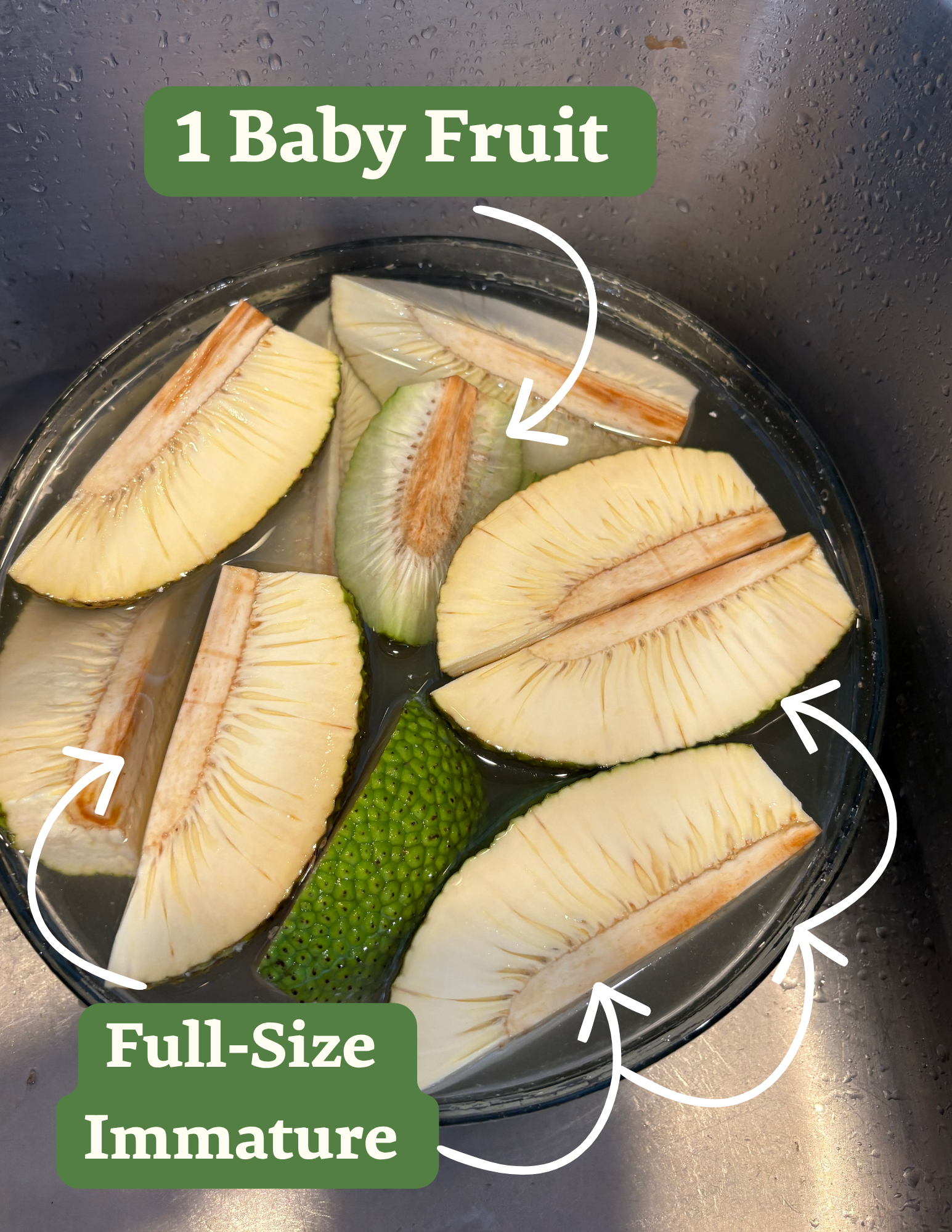
- Internal Indicators: When cut open, baby and full-size immature fruit shows a thin bright-green ring right under the skin, a firm/rubbery interior, and a light, “grassy” aroma rather than a fruity scent.
For full details on identifying peak harvest maturity, consult our Breadfruit Harvesting Guideline page.
2. Preparing Dropped Fruit
Because dropped fruit typically hasn’t fully developed its starches, it will hold up during cooking and stay firm, absorbing broths and spices just like a potato, chayote squash or green papaya. Depending on the size and maturity stage of the dropped fruit, here is how to prepare each:
Baby Dropped Fruit (Best for Pickling)
-
Quarter & Core: Cut off the stem end and slice fresh baby fruit into quarters.
-
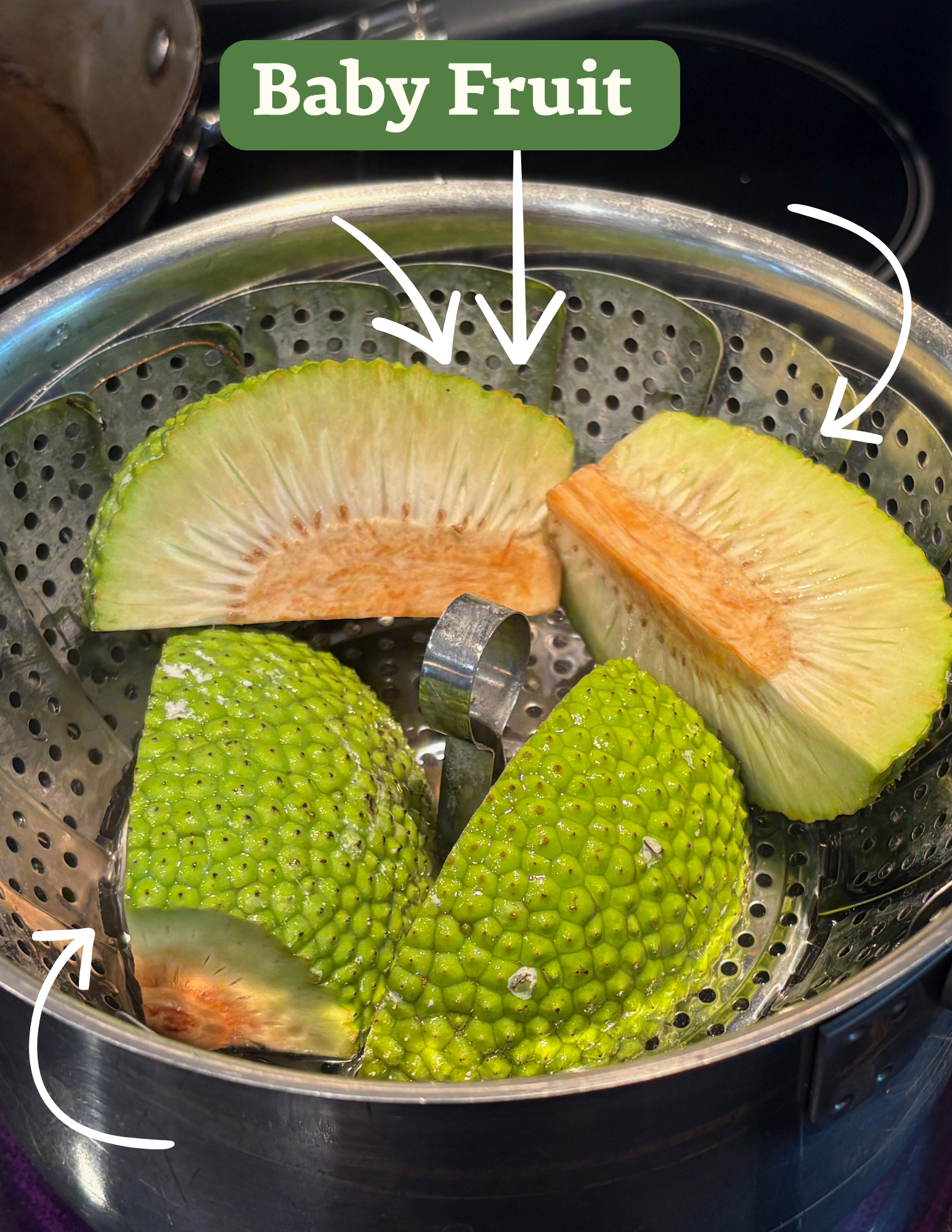
Steam or Boil: Steam or boil the quartered pieces until tender.
-
Slice: Once cooked, cut out the core with a paring knife and slice into thin strips to incorporate directly into pickled salads, crisp quick-pickles, or cold dishes.
Full-Sized Immature Fruit (Grade C)
-
Prep Options: Leave the skin on or trim it off and completely remove the central core. (Note that peel and core can also be removed after cooking).
-
Cut: Quarter the fruit or cut the firm white inside into bite-sized cubes for stews, or thick wedges for fries.
-
Cook: Boil in salted water for 12–15 minutes or you can steam as an easy alternative.
-
Simmer or Store: Toss cooked pieces directly into a bubbling coconut curry, beef stew, or clam chowder for the last 20 minutes of cooking. Alternatively, let them cool and freeze them in airtight bags for quick meal prep later.
3. Recipe Spotlight: ʻUlu Pickles
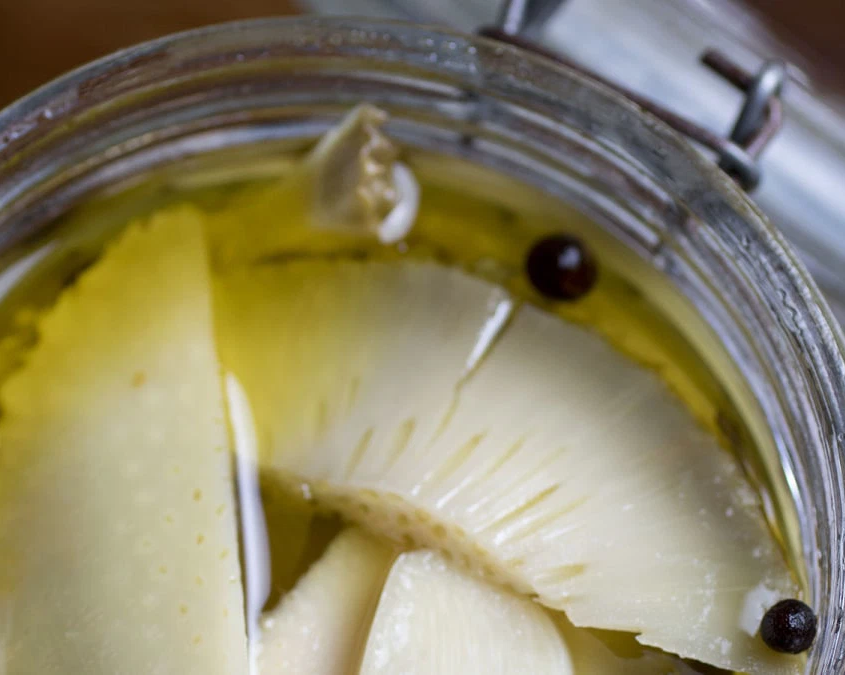
Serve as a tasty & unique pupu, salad garnish, or local substitute for marinated artichoke hearts: ʻUlu Pickles
Please note that baby fruit should be quartered, steamed, or boiled, and cored before slicing and incorporating into the recipe.
Ingredients
- 1 lb fresh baby ʻulu
- 7 oz White vinegar
- 7 oz Water
- 1½ tsp salt
- 4½ tsp sugar
- 2 bay leaf
- 1 tsp peppercorns
- Peel from 1 lemon, sliced in ribbons
- 2 cloves garlic, sliced
- Olive oil, as needed
Directions
-
Quarter the fresh baby fruit, remove the central core, and steam or boil until tender. Slice the cooked quarters horizontally into thin pieces.
-
Place garlic, lemon peel, bay leaf, and peppercorns into your clean mason jar(s), then pack the sliced baby fruit on top of the spices.
-
In a saucepan, bring equal parts vinegar and water to a boil, then stir in salt and sugar until completely dissolved.
-
Pour the hot brine over the sliced baby fruit, leaving 1 inch of headspace at the top of the jar.
-
Top with a thin layer of olive oil, tighten the cap, and gently tilt or shake the jar to mix. Allow the jar to cool to room temperature on the counter before moving it to the refrigerator.
Pickles are ready to serve within 24 hours and can be stored in the refrigerator for up to several months.