KaiaULU Nematode Workshop Against QLB
(Queensland Longhorn Beetle)
As you folks might know by now, the co-op has been learning alongside you on the effects of the invasive species: The Queensland Longhorn Beetle.
QLB is a plant-boring beetle that is invasive in Hawai’i and is causing severe damage to our trees. They increase the risk of pathogens, weaken branches, and can ultimately kill the tree. Since its introduction to Hawai’i in 2009, QLB has been observed causing severe damage to kukui, ‘ulu, cacao, and other species.
For a more in-depth overview of this pest, start with our original QLB overview page.
We have been receiving a lot of support from our friends at the Big Island Invasive Species Committee, Hawai’i Department of Biosecurity and Agriculture, and the United States Department of Agriculture. Specifically, we want to thank Jade Miyashiro (BIISC), Stacey Chun (HDAB), and Roxana Myers (USDA) for connecting with the co-op. Collectively, we are moving forward to keep combating these pests in support of our local agriculture. We are very grateful for all of their help in providing materials and support for educational workshops. They have been very helpful with getting you proper information and even provided nematode kits!
Nematodes
Nematodes are one of the most abundant and diverse soil organisms on the planet, and are being used as a successful biocontrol for a range of pests. When injected into infected trees, they have been found to kill QLB larvae, providing a promising means of reducing QLB populations and protecting important agricultural and cultural trees.
Nematode Workshop
Our most recent learning opportunity was held on May 28th, 2026, at KaiaULU Farms in Honomu. We were hosted on a member farm by farm manager Jesse Kunishige. We want to extend a huge mahalo to him and to the owner, Mark Levy, for allowing the workshop to be held there. Sharing of resources like nematode control is one of the benefits of being part of the cooperative. We are very grateful for the collaborative efforts to have held this successful workshop.
During the workshop, Stacey Chun (HDAB) and Roxana Myers (USDA) held a casual Q&A session. We had about 20-30 farmers who attended this workshop and were able to learn about nematode rearing, how to utilize them, ask any questions about QLB or invasive species, and we had a live demonstration of the QLB on an infected tree site. This session lasted about one hour, and the information shared was very insightful!
A full video of the Q&A session can be viewed here by clicking on the link below. Video credit goes to Drake Weinhert from the Pure KNF Foundation. Mahalo for the amazing footage!
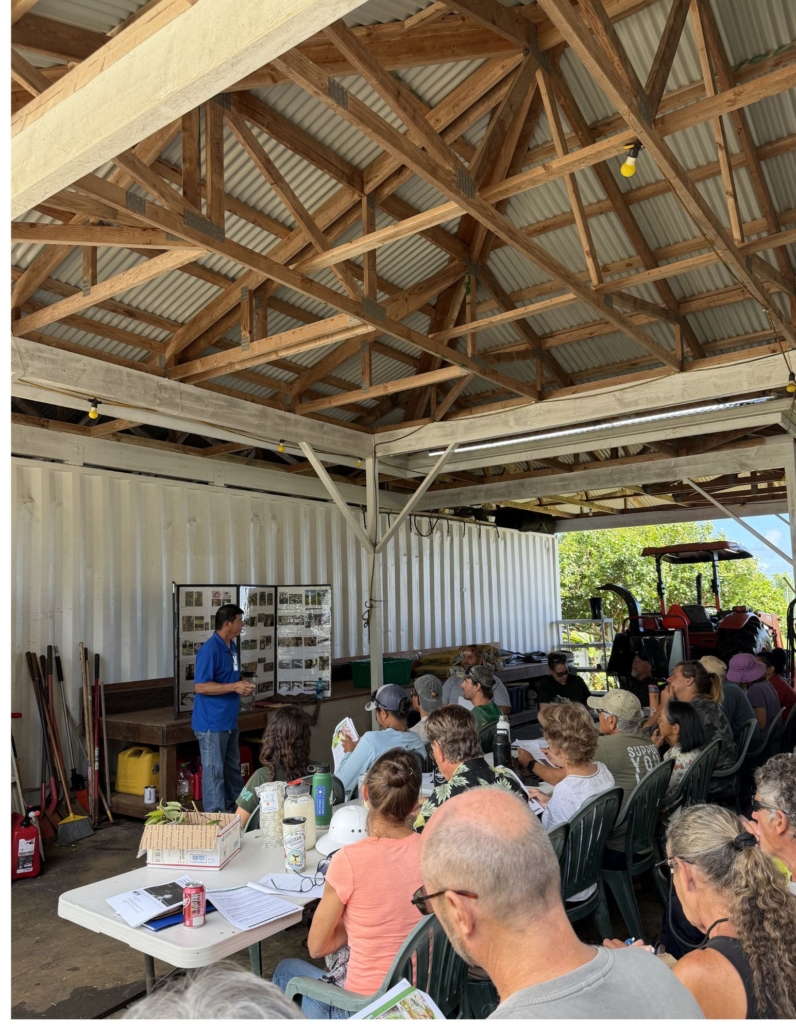
Members, potential members, and community members all gathered to learn, ask questions, and to be able to get hands-on interactions with the nematode kits.
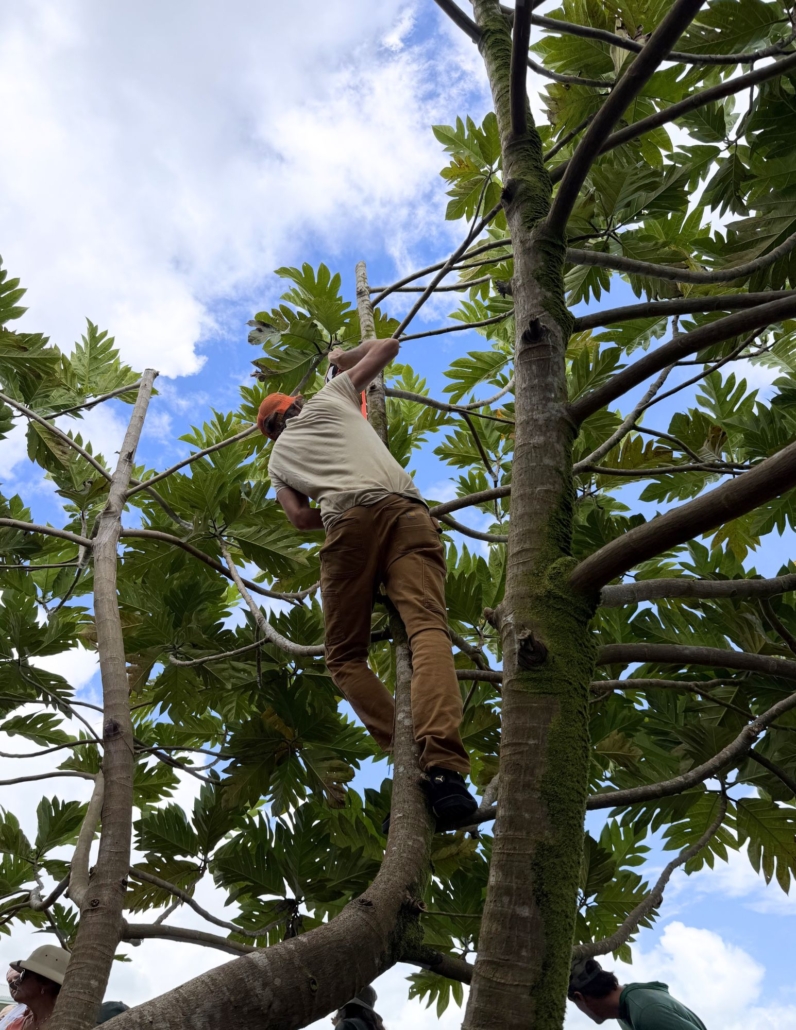
The infected sites were high up in the branches, so we needed to climb up into the tree. The nematodes were then injected right into the infected hole.
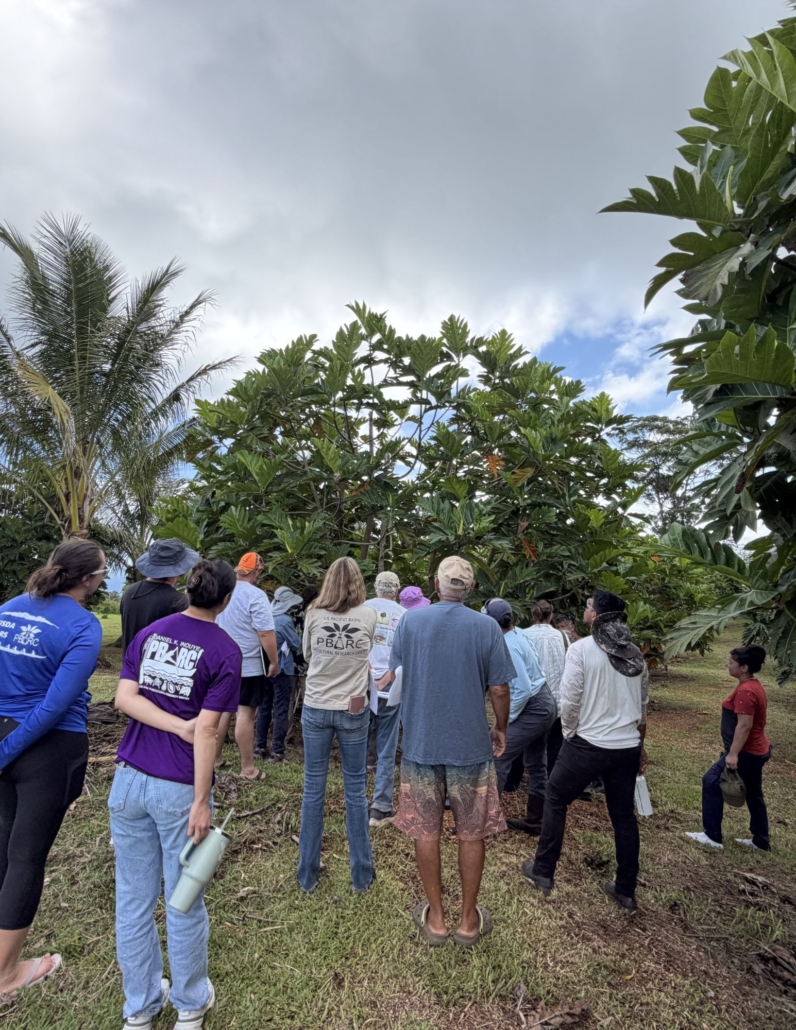
We all gathered around to view the live demonstration of the nematode injection. It is recommended that during normal pruning procedures, you should be surveying for infected sites. This looks like circle-shaped bur holes that have sawdust (frass) and sap leaking out.
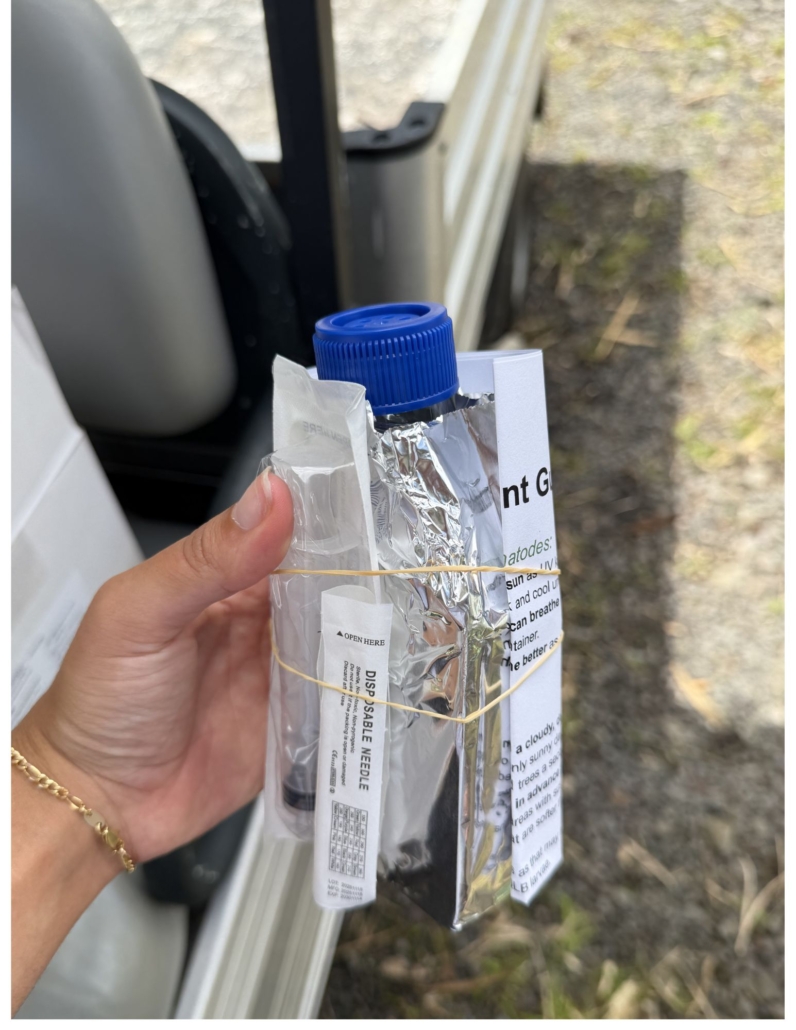
Nematode kits have to be wrapped in foil as the organisms are sensitive to light. Keeping them in a dark and cool environment will prolong their life span. They should be utilized as soon as possible, but they can last for about a month. The earlier they are used, the more alive nematodes you will have in your application that can attack the larvae.
A video of what the infected site looks like can be found by clicking the link below. As you can see the wound on the tree attracts other pests like slugs or small bugs. This site started as a small, exit hole. This is where you would inject the nematodes. Video credit goes to Drake Weinhert from the Pure KNF Foundation.
A video explaining some background info about what to look for when you are pruning can be found by clicking the link below. Video credit goes to Drake Weinhert from the Pure KNF Foundation.
Now What?
From the feedback from this workshop, we plan to keep collaborating with BIISC to plan more workshops for you. We want to keep sharing as much information and resources as we can about QLB so that we can beat this pest together. In this case, the more folks who are aware of the beetle, the more proactive we can be with killing them or their larvae.
Take Action Now:
-
Get Treated: Email biisc@hawaii.edu to request your free nematode treatment kit. More information can also be found at https://www.biisc.org/.
-
Support Research: If you capture a beetle, please drop it off at the USDA-ARS PBARC research center (64 Nowelo St, Hilo).
-
Ask an Expert: For specific questions regarding the understanding of what type of pest you’re dealing with, contact Stacey Chun at dab.ppc@hawaii.gov or 808 – 974 – 414
Rearing Nematodes
Our next steps now include amping up the nematode production and the sharing of the kits. We were able to tour with Roxana Myers at the USDA labs and were instructed on the process of making your own nematodes at home. To learn how to do this yourself at home + even more info, visit our rearing nematodes blog here!


