Making Mā: Fermented Breadfruit
ʻUlu is famous for its abundance of nutritious starchy fruit, but the fruit’s extremely short shelf life of just 1-3 days after harvest (without refrigeration) can sometimes lead to waste. In the latest CTAHR Publication, researchers and cultural practitioners highlight a time-honored solution: Mā, or fermented breadfruit.
This publication discusses breadfruit fermentation in the contexts of cultural tradition, food science, value-added agriculture, and home-scale food processing. A step-by-step guide and illustrated appendix feature instructions for fermenting breadfruit at home.
Traditional fermentation is more than just a storage method; it is a way to transform ʻulu into a nutrient-dense, shelf-stable staple that can last for months—or even years—without refrigeration.
What is Mā?
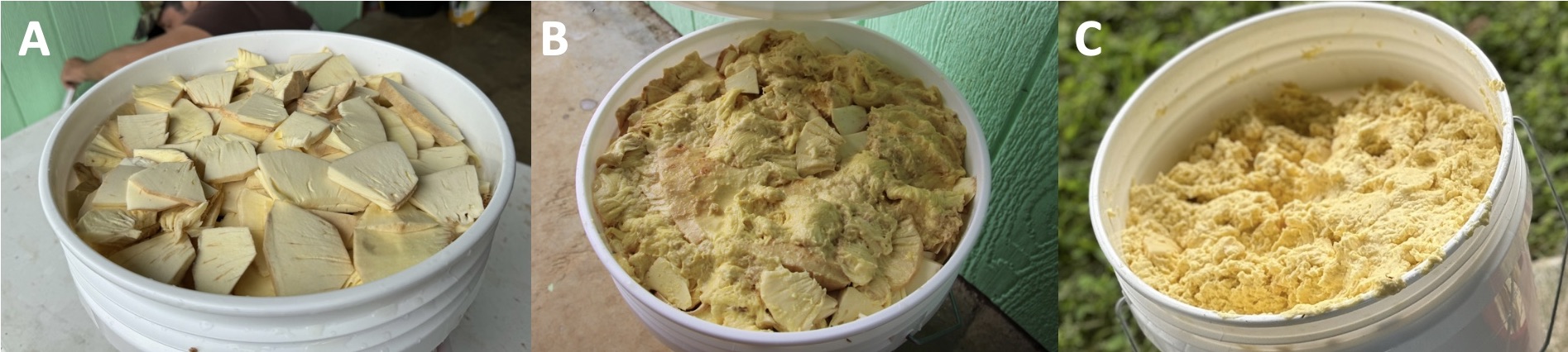
Mā is a traditional Pacific Island method of fermenting breadfruit in pits or containers. The process uses natural anaerobic fermentation to preserve the fruit, creating a tangy, dough-like paste that was historically used as a survival food and a culinary delicacy.
Why Try Fermented Breadfruit?
-
Zero Waste: Save your harvest during the “breadfruit season” peaks.
-
Gut Health: Like yogurt or kimchi, fermented breadfruit is rich in beneficial probiotics.
-
Flavor Versatility: Once fermented, the “dough” can be baked into bread, fried as cakes, or mixed into stews for a unique, sour-savory kick.
-
Economic Resilience: Reduce dependence on imported starches by creating your own long-term staple food source.
Key Takeaways
The new CTAHR guide provides a modern approach to this ancient practice, including:
-
Selection: The best is ripe fruit (peak sugar). But for ease, most people pick it mature and then let it ripen off the tree
-
Preparation: Cleaning, peeling, and coring techniques to ensure a safe fermentation.
-
The Process: A step-by-step guide to packing and sealing the breadfruit, allowing the natural probiotic cultures to thrive.
-
Usage: Tips on how to prepare and cook the final product.
Download the Full Guide
Ready to start your own fermentation pit or jar? You can download the complete step-by-step instructions and safety tips directly from the University of Hawaiʻi CTAHR website:
Download CTAHR Publication: Making Mā: Fermented Breadfruit (PDF)
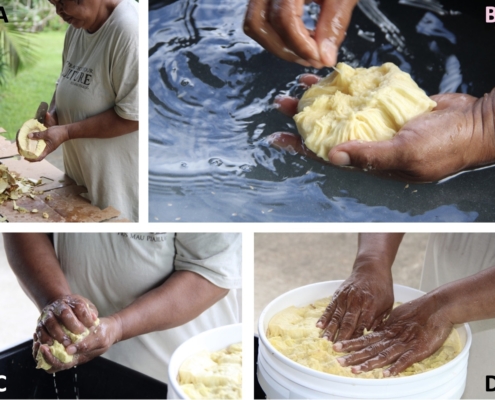
This material was developed with support from the University of Hawai‘i College of Tropical Agriculture and Human Resources (CTAHR) and its contributing authors. We gratefully acknowledge their efforts in documenting the traditional practice of making Mā, along with the collaboration of the researchers and practitioners involved in creating and sharing this vital educational resource for the breadfruit community.
Contributors:
-
Noa Kekuewa Lincoln, nlincoln@hawaii.edu Dept. of Tropical Plant and Soil Sciences
-
Jermy Uowolo, Halora Lapiyalur, Remathau Community of Hawai‘i (RCH)
-
Laura Rieber, Dolly Autufuga, Ho‘oululahui Akaka, Joshua Silva Dept. of Tropical Plant and Soil Sciences


