HAAS Nematode Workshop
QUEENSLAND LONGHORN BEETLE
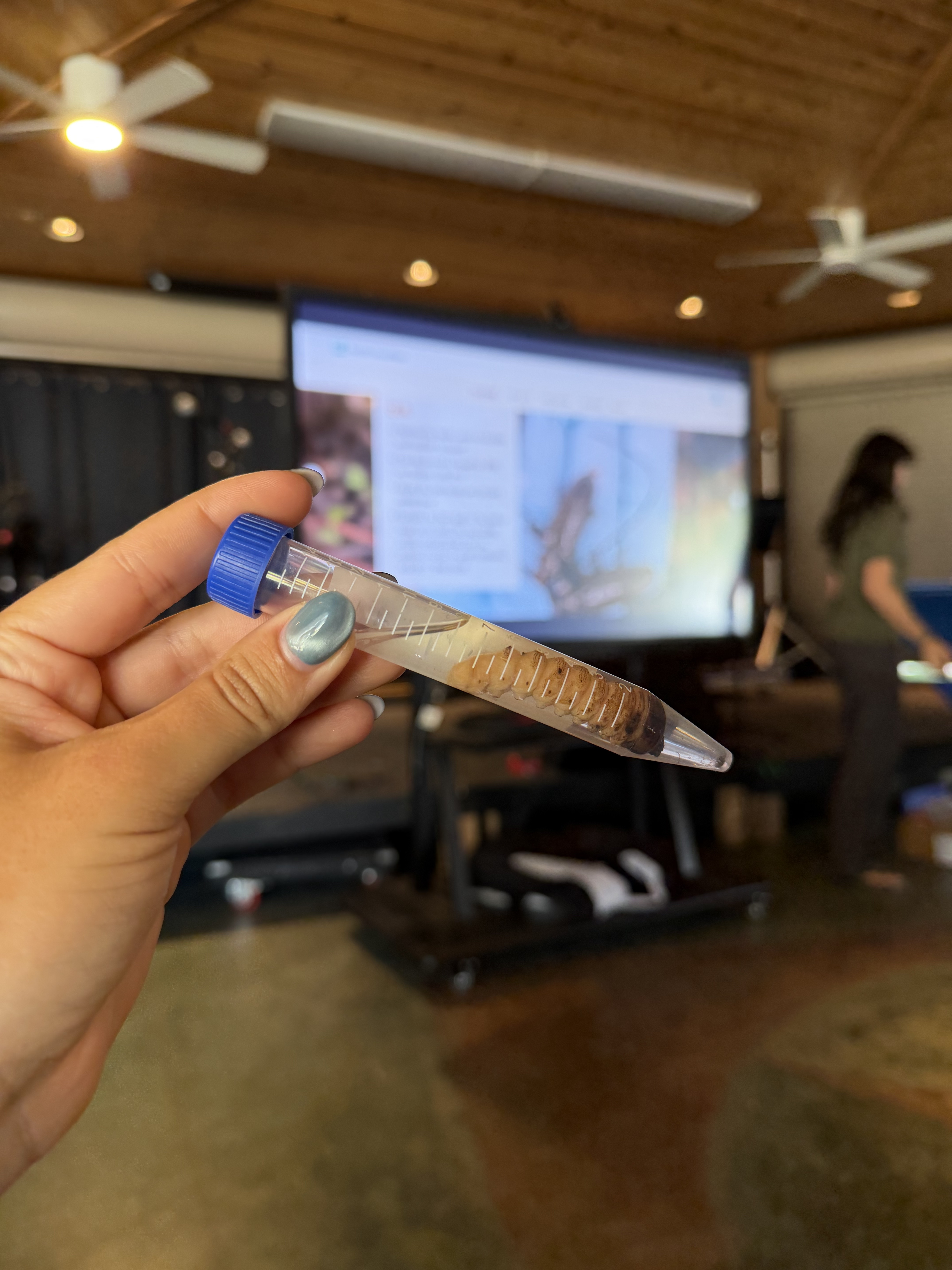
QLB is a plant-boring beetle that is invasive in Hawai’i and is causing severe damage to our trees. They increase the risk of pathogens, weaken branches, and can ultimately kill the tree. Since its introduction to Hawai’i in 2009, QLB has been observed causing severe damage to kukui, ‘ulu, cacao, and other species.
For a more in-depth overview of this pest, start with our original QLB overview page.
NEMATODES
Nematodes are one of the most abundant and diverse soil organisms on the planet and are being used as a successful biocontrol for a range of pests. When injected into infected trees, they have been found to kill QLB larvae, providing a promising means of reducing QLB populations and protecting important agricultural and cultural trees.
QLB Larvae
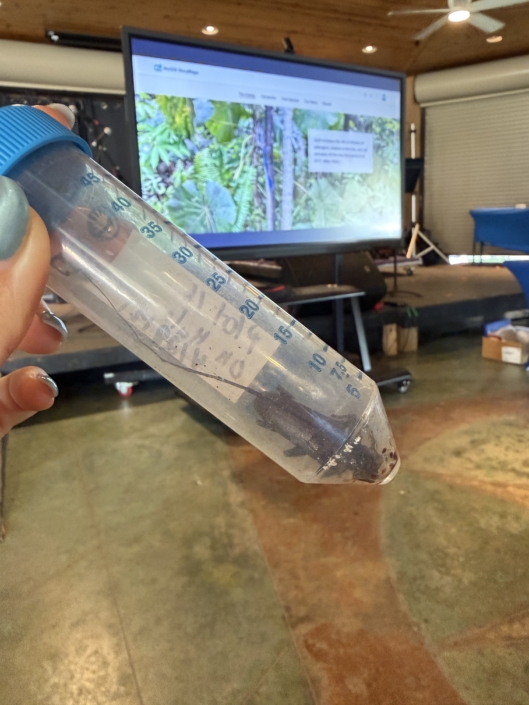
An adult QLB Beetle
INDIGENOUS NEMATODES TREATMENT WORKSHOP
At a restoration site in Keaukaha Military Reservation, within the ahupuaʻa of Waiākea in Hilo, Hawaiʻi, Liko Nā Pilina ( a hybrid ecosystems project working through UH Hilo) observed extensive QLB damage to kukui and ‘ulu trees. These trees serve as important canopy species that provide shaded habitat for native seedlings. In response, they are testing an indigenous nematode, Heterorhabditis indica, as a biological control agent against the QLB in kukui and ‘ulu trees. When injected into infected trees, they target and kill QLB larva, offering a promising strategy to reduce the QLB population and protect our native and culturally important trees.
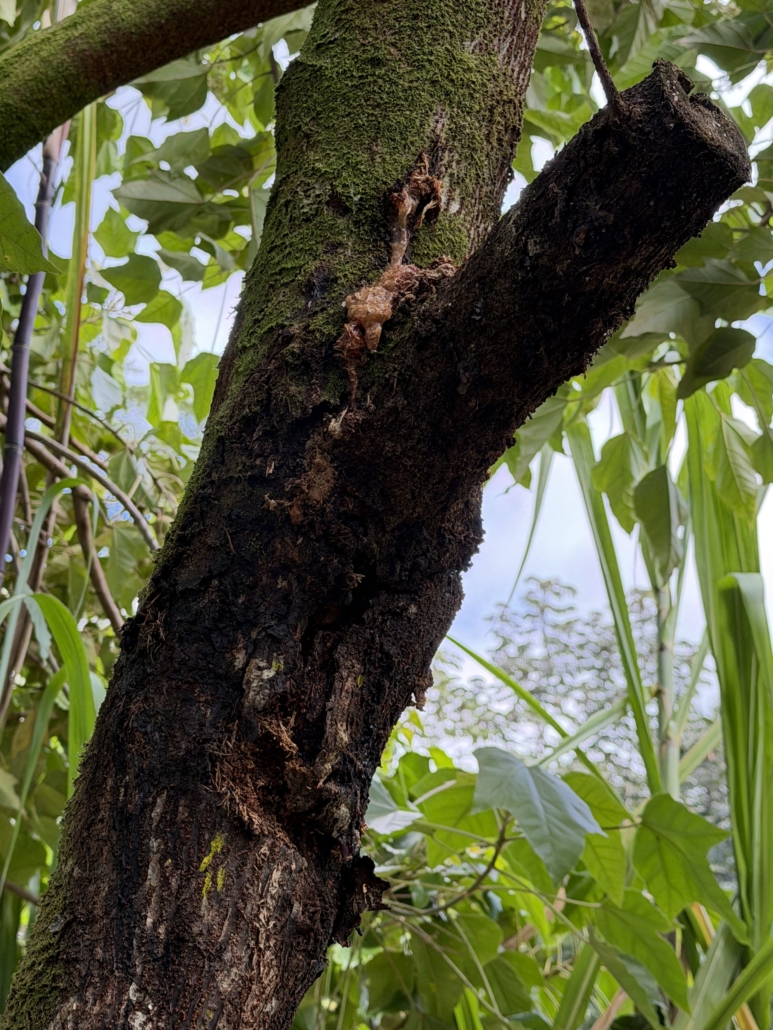
Injured and infected trees produce sawdust (frass) coming out of holes in the bark and sap oozing from damaged areas
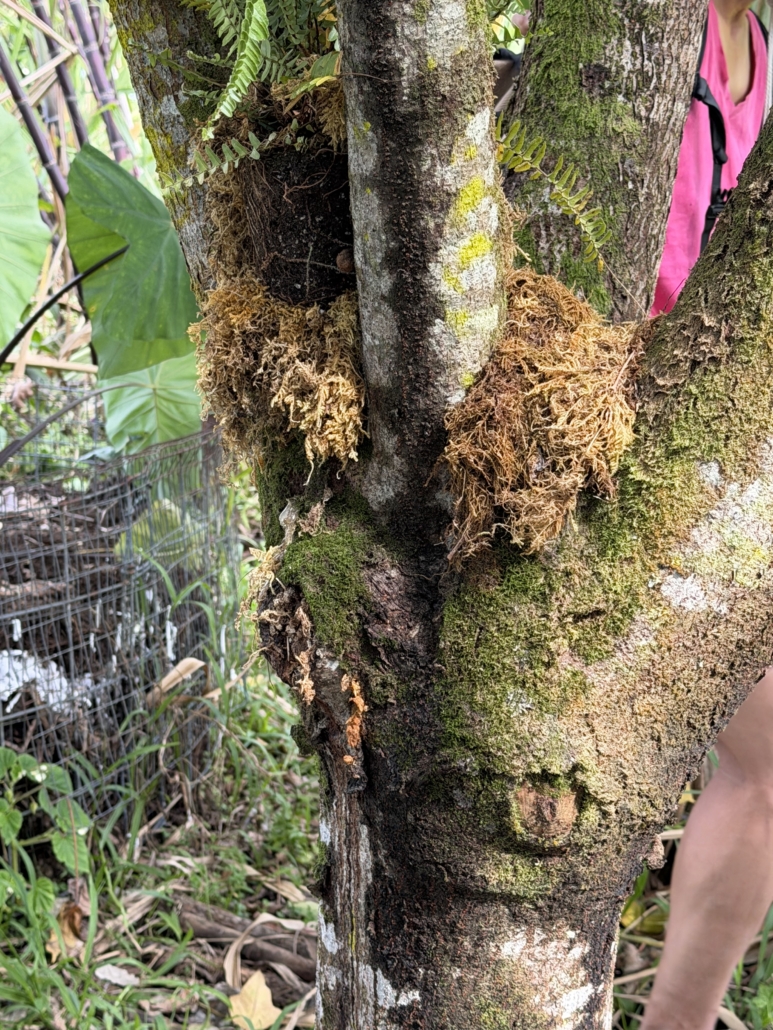
It can be expected to see perfectly circular exit holes and branch dieback
METHODOLOGY
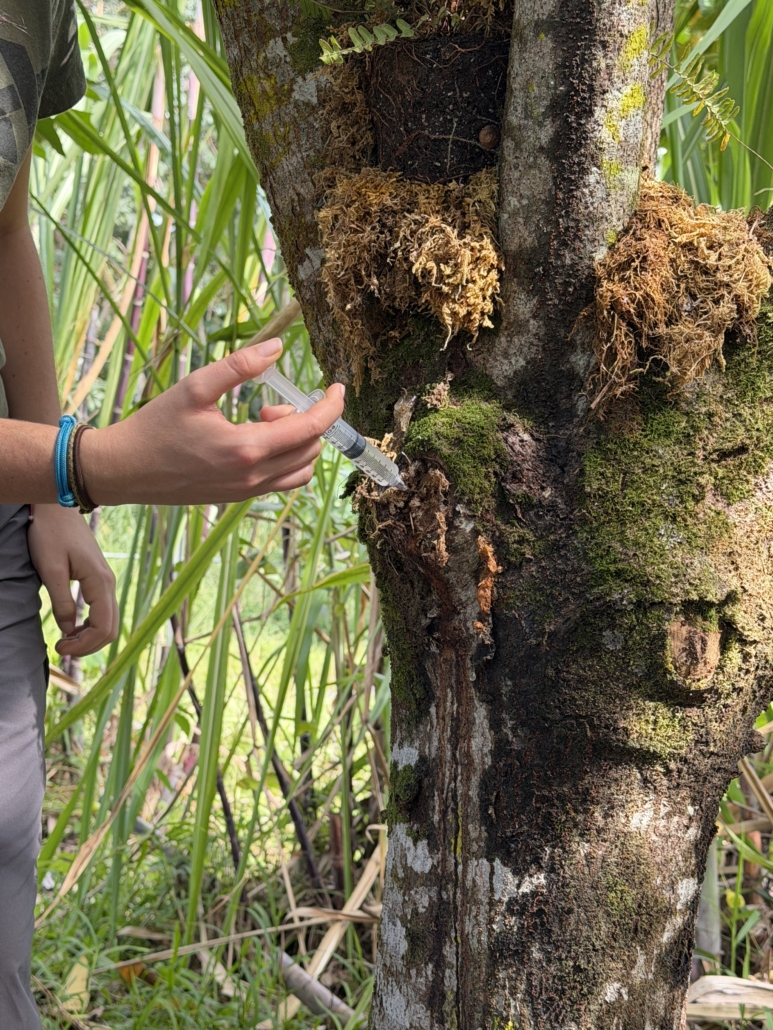
During the project, treatments were applied every 2–3 weeks during overcast or rainy weather to improve nematode survival. Nematodes were stored in water filled flasks and injected into each area of fresh frass until saturated. The amount applied varied by infection severity, with a maximum of 70 mL per tree. Approximately two weeks after treatment, trees’ health and infection levels were checked to evaluate the effectiveness of the biocontrol.
DATA & RESULTS
Change in kukui infection after treatment (p < 0.05):
-
Elimination: 48.4%
-
Reduction: 25.8%
-
Unchanged: 25.8%
-
Increase: 0.0%
Change in ‘ulu infection after treatment (p < 0.05):
-
Elimination: 70.0%
-
Reduction: 10.0%
-
Unchanged: 20.0%
-
Increase: 0.0%
The findings indicate that H. indica is an effective biocontrol against QLB in kukui and ‘ulu trees. Across all treated trees, most showed a reduced or eliminated infection. As invasive species like QLB continue to impact our islands, effective management will require collective effort.
The nematodes being injected directly into the infected area
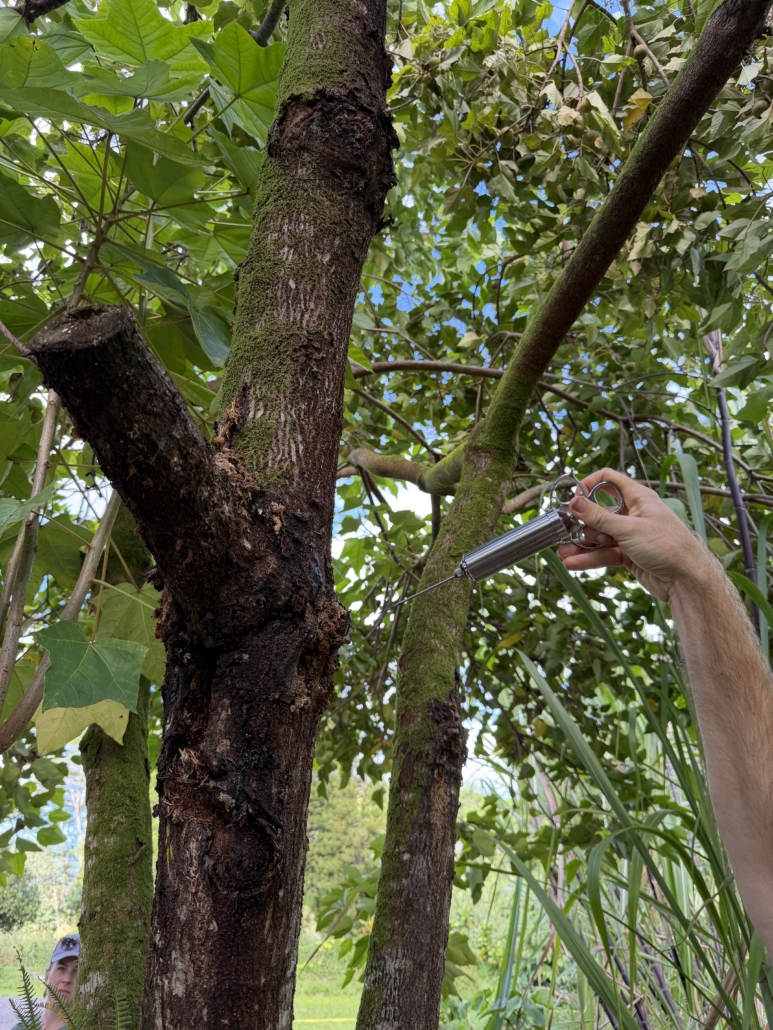
A new tool being tested for nematode insertion
Protect Your Trees: Get Your Free Nematode Kit
Have you noticed circular exit holes or “toothpick” sawdust on your ‘ulu, kukui, or citrus trees? Don’t wait for branch dieback to occur.
Take Action Now:
-
Get Treated: Email biisc@hawaii.edu to request your free nematode treatment kit. More information can also be found at https://www.biisc.org/.
-
Support Research: If you capture a beetle, please drop it off at the USDA-ARS PBARC research center (64 Nowelo St, Hilo).
-
Ask an Expert: For specific questions regarding tree health and biocontrol, contact napilina@hawaii.edu


